


UV water treatment versus chlorine in commercial pools is usually a decision about complementary roles: chlorine maintains disinfectant in the pool water, while UV treats water passing through a reactor. UV does not replace the required residual or routine operating checks. Compare the complete system, not the device alone.
If you manage a hotel, apartment, school or municipal pool, the buying question is whether additional treatment addresses a documented need and fits the facility you operate. Start with the approved system, water-quality records, equipment condition and the people responsible for daily operation.
For a Minnesota project, Olympic Pools can be part of that scope conversation. Request a consultation with your equipment list, operating records and project goals, rather than requesting a UV unit in isolation.
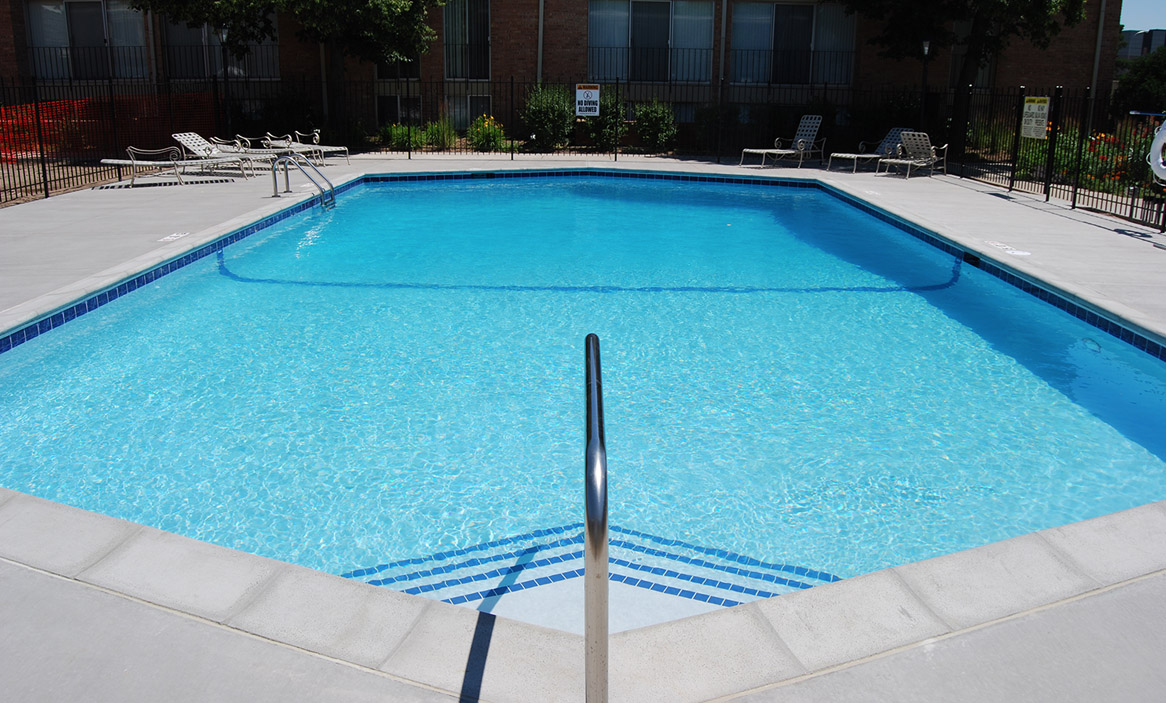
UV water treatment vs chlorine: commercial pools need both roles understood
A disinfectant residual is the measurable disinfectant remaining in pool water. UV treatment exposes circulating water to ultraviolet light inside equipment. These are different treatment functions: maintaining a residual throughout the pool is not the same as treating water at one point in the circulation system.
In Minnesota, the public-pool water-condition rule requires continuous disinfection with a chemical that provides a measurable residual when the pool is in use. Adding UV does not remove that requirement. Have the responsible operator and reviewing authority confirm the operating requirements for the particular pool, spa or water feature.
For facilities elsewhere, begin with the applicable jurisdiction and approved plans. CDC’s Model Aquatic Health Code is model guidance that jurisdictions can use; it is not a single nationwide operating permit. A proposal should identify the requirements it is designed to meet.
Why consider UV if chlorine remains?
The reason should be more specific than a promise of a “chemical-free” pool. CDC’s chloramines guidance identifies UV as one approach to breaking down chloramines in water. It also explains the importance of ventilation at indoor facilities. Equipment should not be sold as a substitute for addressing the source of a water- or air-quality problem.
There is also a difference between a validated secondary-treatment installation and equipment offered for supplemental treatment. The 2024 MAHC design provisions distinguish those roles. Ask which role the proposed equipment will perform and what documentation supports it. Do not assume that every unit described as UV provides the same treatment performance.
Compare the complete treatment scope
Use this decision table to compare responsibilities and evidence. It is a proposal-review aid, not an equipment specification or a direction to change chemical feed settings.
| Decision | Chlorine-based disinfection | UV treatment added to the system | Owner’s evidence request |
|---|---|---|---|
| Treatment purpose | Maintains the required chemical disinfectant residual in the pool. | Treats water passing through the reactor; it does not leave a disinfectant residual. | Define the existing requirement and the additional problem the project must address. |
| Operating responsibility | Requires appropriate water testing, feed-system oversight and operating records. | Adds equipment status, alarms and manufacturer-specified checks to the operator’s work. | Name the daily operator, backup and escalation contact for each system. |
| Performance evidence | Review actual water-quality and equipment records, not a controller display alone. | Request model-specific documentation and the conditions under which the proposed performance applies. | Ask the design professional to reconcile the proposal with actual operating conditions. |
| System interface | Coordinates with circulation, filtration, controls and chemical handling. | Requires review of its location, flow conditions, controls and safe service access. | Obtain a coordinated equipment arrangement and a clear division of trade responsibilities. |
| Service scope | Includes the existing feed equipment, test equipment and relevant service work. | Adds lamps, sleeves, sensors and other model-specific service requirements. | Identify parts, labor, access, downtime and who performs each task. |
| Buying boundary | Must continue meeting the facility’s required operating conditions. | Does not justify reducing required protection or ignoring unresolved operating faults. | Require a complete scope and acceptance plan, not only an equipment price. |
Bring these questions into commercial pool project planning early. A retrofit may affect more than the treatment device, including equipment-room space, electrical work, controls, approvals and the available shutdown period.
The Olympic Pools Treatment Fit Review
Organize the purchase around five decisions. Each decision should produce something the owner can inspect before approving the next part of the work.
- Establish the operating baseline. Collect the current plans, equipment identifiers, recent water-quality logs, service reports and a description of the concern. Separate recurring observations from a one-time complaint. If required operating conditions are not being met, follow the facility’s approved response process; a future equipment purchase is not a reason to continue unsafe operation.
- Define the additional treatment objective. Ask whether the project concerns combined-chlorine management, a specified secondary-treatment requirement, equipment reliability or another documented need. Keep that objective separate from a general desire to modernize the equipment room. Agree how the completed work will be evaluated.
- Review the actual system fit. Have the qualified project team check the proposed model against the pool’s operating conditions and treatment role. Resolve flow information, controls, required approvals and equipment interfaces. A brochure capacity statement should not replace a site-specific selection.
- Make service access part of the design. Review access for inspection, component replacement and removal of equipment. Ask which work requires a shutdown, what spare parts are practical and who responds to an alarm. Do not accept an arrangement that makes routine service inaccessible.
- Assign the handover. Identify who documents settings and approvals, supplies manuals, demonstrates normal operation and explains fault-response responsibilities. The facility needs an operating plan its actual staff can maintain after the installation team leaves.
Olympic Pools’ construction and service experience provides useful context for coordinating a Minnesota project. Confirm the specific design, installation, commissioning and ongoing service responsibilities in the agreement rather than assuming one party supplies every discipline.
A worked equipment-review example
Consider a hypothetical indoor hotel pool with recurring odor complaints and an owner asking for a UV quote. No test result, equipment model or savings estimate has been established. The useful first deliverable is a review of the records and existing systems, not a promised outcome.
The owner can use the following checklist to make competing proposals comparable:
- Problem record: Describe when complaints occur, the operating pattern and what the facility has already observed. Supply relevant logs without identifying guests.
- Existing treatment: Provide equipment labels, current diagrams, service history and available flow information. Identify missing information for the qualified reviewer to obtain.
- Indoor environment: Include the responsible building-systems contact. Ask whether ventilation and water-treatment issues need coordinated review.
- Proposed UV role: Require the supplier to state whether the installation is secondary or supplemental treatment and provide the corresponding model documentation.
- Installation interfaces: Identify the party responsible for piping, electrical work, controls, permissions and inspections. Require a coordinated scope rather than disconnected allowances.
- Operating handover: List staff instruction, manuals, service access, fault reporting and the records the owner will retain.
- Acceptance: Write down what will be demonstrated and who will accept the work. Keep unresolved observations visible instead of converting installation completion into a claim that every complaint has been solved.
Proposal A might cover only equipment supply. Proposal B might include a coordinated review, installation and handover. Those scopes cannot be compared by the device price alone. Ask both suppliers to identify exclusions, owner responsibilities and the evidence they will provide.
Use the same distinction when reviewing commercial pool service scope. Routine operating support, a repair visit and an engineered system change are different purchases, even when they concern the same equipment room.
Maintenance, timing and lifecycle scope
Request model-specific maintenance instructions and a service plan before approving equipment. A UV installation introduces its own components and checks; it does not eliminate the existing circulation, filtration or disinfection workload. Do not bypass alarms or open energized treatment equipment to keep a pool available.
Build the comparison around the same planning period and operating assumptions. Ask for the equipment, installation, controls, approvals, commissioning, replacement components, service labor, utilities and expected access needs included in each proposal. Identify which items are allowances and which depend on site findings. Do not insert assumed chemical savings to make a proposal look less expensive.
Review facility design and operating needs when equipment space or interfaces are part of the constraint. If a project also changes the pool, finishes, circulation or supporting systems, compare it with the larger commercial renovation scope before treating it as a stand-alone equipment replacement.
Plan the shutdown around the facility’s actual calendar. For an outdoor Minnesota pool, coordinate the project with opening, closing and other planned work. For an indoor venue, discuss access and service interruptions with the property team. A seasonal deadline does not remove approval, commissioning or safe-operation requirements.
CDC’s public-pool operating guidance emphasizes trained operation, equipment checks and water-quality monitoring. Match training and written responsibilities to the people who will run this facility. Minnesota pool operator training can support that preparation; it does not replace equipment-specific instruction.
Questions before selecting equipment
What should a UV-versus-chlorine review include?
Review the required disinfectant residual, the additional treatment objective, existing equipment and records, proposed system interfaces, maintenance and operating responsibilities. Ask for a complete project scope and a documented acceptance process.
What records should the owner prepare?
Bring plans, equipment identifiers, operating and water-quality logs, service history, available flow information, relevant approvals and the planned shutdown window. Mark unknowns for the project team to resolve rather than guessing at equipment ratings.
Is this a repair, a replacement or a renovation?
That depends on the finding. A service fault may need a repair; unsupported equipment may need replacement; changes to layout or connected systems can expand the project. Have the proposed scope identify the actual problem and the work required to address it.
When is a qualified site assessment important?
Request one when system information is incomplete, operating conditions are not being maintained, treatment roles are unclear or the proposal changes equipment interfaces. Use the responsible operator and qualified project professionals; do not size or install a system from a general comparison article.
What changes the complete installed scope?
Equipment condition, access, the proposed treatment role, controls, trade work, approvals and commissioning can all affect the scope. Compare itemized proposals using the same assumptions and identify exclusions before deciding.
How should service access and handover be planned?
Assign routine checks, fault reporting and service contacts before installation. Include manuals, staff instruction, access for replacement work and a retained record set. The CPO certification explanation helps distinguish operator training from the project’s separate technical and service responsibilities.
Prepare the next project conversation
Send your facility location, pool use, equipment information, recent operating records and the concern you want resolved. Include the proposed timing and who manages daily operation. Contact Olympic Pools to discuss the appropriate next step for a Minnesota project and confirm service coverage before planning work elsewhere.

Leave a Reply