


Commercial swimming pool heaters should be selected for the facility’s operating window, heating demand and installed system, not a nameplate rating alone. Ask for manufacturer-specific professional sizing and a proposal that identifies utilities, venting, controls, service access and exclusions before comparing equipment prices.
This guide helps facility owners and property teams compare a heating replacement, a changed operating schedule or a larger commercial project. Olympic Pools brings a Minnesota base in pool design, construction, renovation and service. Start with the facility location and project needs; confirm coverage rather than assume nationwide installation crews.
A commercial pool heating system includes the selected heating equipment and its connections to circulation, controls and building services. The complete installed scope also covers the work needed to put that equipment into supported operation. A heater-only quotation may leave those responsibilities elsewhere.
Discuss your heating project with Olympic Pools. Send the facility location, pool records, current equipment details and required operating hours. Ask which design information and site assessments are needed before equipment can be selected.
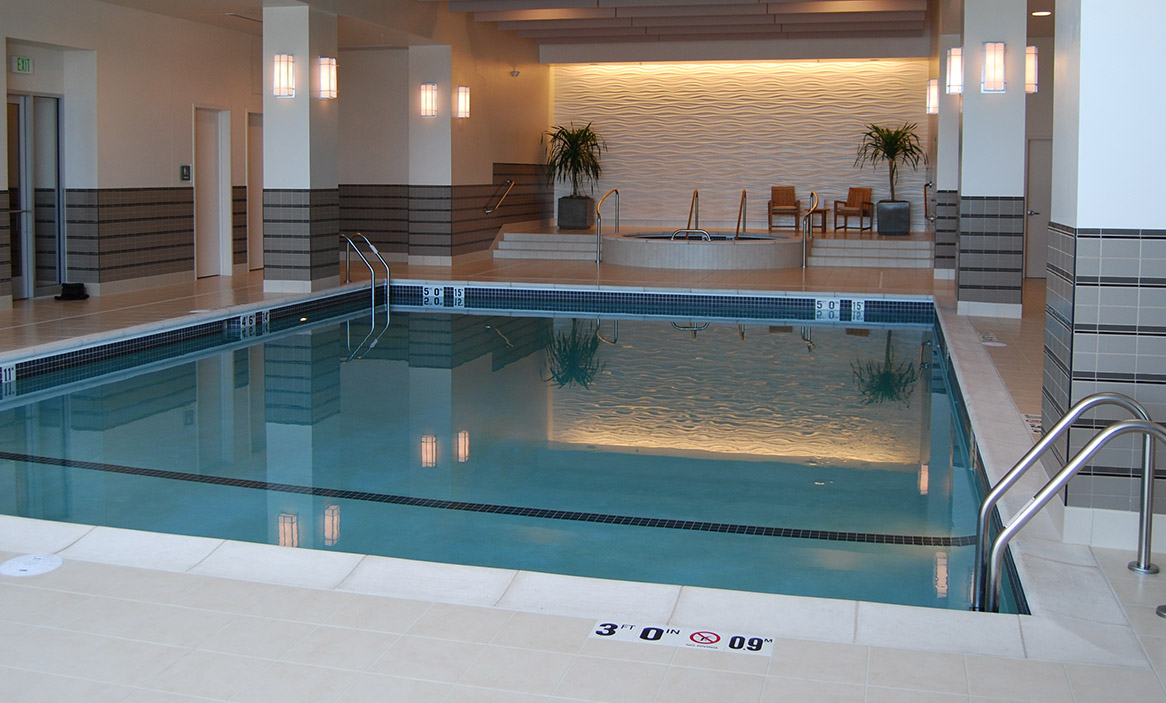
Commercial swimming pool heaters start with the operating window
Write down when the water must be ready, not just when the building opens. A year-round indoor facility, a seasonal outdoor pool and a spa with different usage have different project questions. Identify normal hours, closure periods, desired temperatures and any recovery requirement after a shutdown.
Separate maintaining temperature from raising it within a limited window. Ask the designer to explain the demand being served, the heat-loss assumptions and the conditions under which the proposed equipment is expected to meet it. Replacing the old unit’s rating does not establish that the old design still fits.
Raypak’s commercial pool catalog illustrates why assumptions matter: its commercial sizing table states a 15-hour basis and an average pool depth of five feet. That is a stated table basis, not a sizing rule for your property. Require a qualified designer to use the selected manufacturer’s current model information and the actual facility conditions.
EPA’s WaterSense commercial pool guidance identifies water temperature, indoor or outdoor conditions, air movement and exposed surface area as evaporation factors. It also discusses covers as an evaporation-control measure. Record actual cover use and environmental conditions for the design team; do not assume a cover is used every closed hour or change operating temperatures without the responsible team.
Connect these decisions with facility design and operating needs. A heating selection should fit the pool’s intended use and other systems rather than become an isolated purchase.
Prepare a six-part owner record
A useful request for proposals gives each bidder the same starting facts. Gather existing records without opening equipment or trying to establish utility capacity yourself. Mark unknown information so the site assessment can resolve it.
- Facility and pool information. Supply the location, pool and spa drawings, dimensions and available equipment schedules. Distinguish documented information from estimates.
- Operating requirements. List the season, daily hours, desired water conditions, closure allowances and the time by which the facility must be ready.
- Existing heating and controls. Provide model and serial details from records, service history, control descriptions and photographs taken from safe accessible positions.
- Utilities and installation context. Gather available gas or electrical records, equipment-room drawings and venting information. Leave adequacy and modifications to qualified professionals.
- Water and environmental history. Include relevant operating logs, known corrosion concerns, indoor or outdoor exposure and actual cover practices, without assigning a cause from appearance.
- Continuity and service needs. Explain what a heating outage means for operations, who maintains the system and how equipment can be reached or removed for service.
If the immediate concern is a recurring fault rather than a new commercial design, use the existing heater repair versus replacement questions first. That guide organizes symptoms and a service conversation; this one addresses equipment selection and the complete commercial installation.
Compare equipment with its interfaces
Raypak’s professional heating range includes gas, heat-pump, electric and indirect options. Those categories are starting points for a qualified selection, not interchangeable products. Ask why the proposed approach suits the operating window, available services and actual installation.
Fuel and power: identify the energy source and who confirms the available supply. An equipment price should not silently assume that existing services can support the replacement. Name any utility coordination, electrical or fuel-supply work included, allowed for or excluded.
Venting and location: have the project team establish the selected model’s installation requirements and whether the existing location is suitable. A new cabinet fitting in the old space does not establish acceptable venting, combustion-air arrangements or service clearance. Do not adapt those systems from a general article.
Water-side and controls interfaces: ask how the heater connects with circulation, operating controls and protective functions. The proposal should identify retained and replaced components and who confirms compatibility. A familiar controller name does not establish that a particular commercial integration is supported.
Corrosion context: give the assessor water-care records, observed deterioration and exposure information. Ask how the selected materials and maintenance requirements fit those findings. A material label alone is not a promise of corrosion immunity, service life or warranty coverage.
Redundancy: define the operational need before requesting extra equipment. Ask what service remains available if a unit is unavailable, how the arrangement is controlled and what supporting systems remain shared. Multiple heaters do not, by themselves, establish uninterrupted operation.
Use commercial pool project planning to place these responsibilities in the wider project. Where several systems change together, the coordination matters as much as the equipment schedule.
Installed-heating proposal grid
Use the same six headings for every bid. Compare what is included, what remains an allowance and what another party must deliver. The grid is an owner briefing tool, not a manufacturer sizing calculation.
| Scope item | Owner information | Proposal must identify |
|---|---|---|
| Operating window | Season, daily hours, required readiness and permitted shutdown. | The operating requirement being served and any conditions or limitations. |
| Design assumptions | Pool records, temperatures, environment and actual cover use. | Manufacturer-specific sizing responsibility and the assumptions to confirm. |
| Equipment | Current models, service history and continuity needs. | Selected models, configuration, material suitability and support requirements. |
| Interfaces | Available utility, piping, venting and control records. | Retained connections, required changes and the responsible trades. |
| Service | Maintenance responsibility, access and outage constraints. | Access provisions, service arrangements and the handover information. |
| Complete installed scope | Budget boundaries, project sequence and other contracted work. | Removal, installation, coordination, commissioning, exclusions and allowances. |
A hypothetical hotel proposal comparison
Consider an indoor hotel pool that must be ready at 6 a.m. and closes at 10 p.m. Its manager seeks a replacement and expects to retain the existing controls. These are hypothetical requirements, not an Olympic Pools project or a recommendation for operating your facility.
Proposal A includes a heater and connection to existing services, but excludes utility changes and controls integration. Proposal B includes those assessments and an allowance for supporting work. The manager cannot compare the totals as if both deliver the same installed system.
Work through the grid: both bidders must address morning readiness; disclose their pool and environmental assumptions; name the equipment; state whether retained controls and services are suitable; explain service access; and separate fixed scope from allowances. Ask for revised boundaries before selecting a price. Neither proposal establishes a heating result until its design assumptions are supported.
If the findings expand beyond the heating installation, compare the decision with commercial renovation scope. For a new facility or coordinated build, bring heating into commercial pool construction planning before the surrounding work fixes the available space and sequence.
Make service access and handover part of the purchase
Ask who can service the selected equipment and how future removal will work. Identify maintenance access, records to retain and any responsibilities divided between pool, building and specialist contractors. Clarify response arrangements without assuming a particular response time or manufacturer affiliation.
Plan the installation around the actual closure allowance and seasonal conditions. Name who coordinates the work, who confirms readiness for operation and what happens if an unresolved interface changes the schedule. A delivery date for equipment is not a completed commissioning date.
The handover should provide the installed equipment record, applicable manuals, control and service information, commissioning records, outstanding items and contacts. Connect these duties with the facility’s commercial pool service scope. Keep any proposed warranty terms in writing; do not infer them from a product family or sales label.
Commercial pool heating questions
What should commercial pool heating include?
A defined operating requirement, supported equipment selection and an identified installation scope. State the utilities, controls, connections, service provisions and exclusions alongside the heater itself.
What records should the owner prepare?
Gather pool drawings, equipment and service records, operating hours, relevant environmental and water-care information, and available utility documents. Mark gaps for qualified assessment.
How does selection differ from repair or renovation?
Repair starts with diagnosing an existing fault. Equipment selection establishes what serves the intended operation. A larger renovation can change several systems and requires a coordinated project boundary.
Which conditions need a qualified site assessment?
Unconfirmed utility capacity, venting or control compatibility, corrosion concerns and changed heating requirements need professional assessment. Do not inspect fuel or electrical internals or bypass protective devices to gather information.
What changes the complete installed scope?
Required service changes, retained-system interfaces, access, removal, controls work and commissioning responsibilities can change the project. Compare inclusions and allowances before treating bids as equivalent.
How should timing and handover be planned?
Agree on the closure window, coordination, readiness checks, records and ongoing service responsibility. Distinguish equipment arrival from an installation ready for supported operation.
Bring the operating requirement to the first conversation
Read about the Olympic Pools team and background, then request a commercial heating conversation with your facility location, hours, pool records and current equipment details. Ask what sizing and site-assessment work must precede a complete installed proposal.

Leave a Reply