


Commercial pool deck repair starts with separating surface damage from drainage, movement and pool-edge problems. Facility owners need a documented condition assessment before comparing repair proposals. The useful scope identifies what will be repaired, what requires further investigation, how access will be managed and who will accept the finished work.
For a hotel, apartment property, school or recreation facility, the decision is not simply which finish looks best. It is whether a limited repair addresses the observed condition or whether the deck belongs in a larger renewal project. Olympic Pools’ Minnesota team helps owners connect pool construction, renovation and service questions. Confirm the project location and service fit before assuming coverage outside Minnesota.
A pool deck repair is work on a defined portion or component of the walking surface around a pool. It may address a localized defect, but it is not automatically a structural repair, drainage redesign or whole-deck replacement. Those boundaries should be established in the assessment and written proposal.
Planning a project? Send the facility location, photographs and available deck plans to Olympic Pools to discuss the appropriate next conversation.
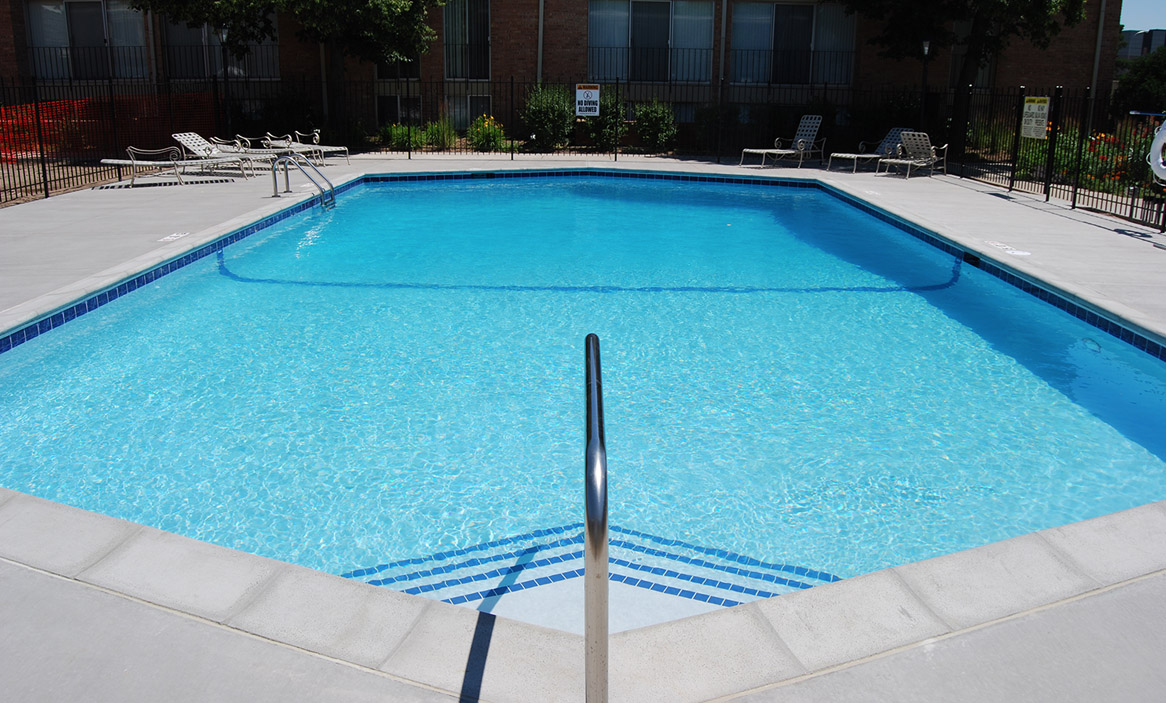
What commercial pool deck repair should resolve
Start by describing the problem without choosing a remedy. “Water remains beside the entry after normal use” is a useful observation. “The entire slab needs replacement” is a conclusion that needs supporting investigation. Keep observations, findings and proposed work in separate parts of the project record.
A localized repair has a defined boundary. A broader deck renewal may involve connected areas, interfaces and operational changes that a small patch cannot address. Neither option is inherently better: the right scope depends on the cause, condition and intended use of the existing deck.
Read the deck proposal alongside the facility’s repair-versus-renovation decisions. If a pool-edge component, circulation change or enclosure project is already planned, coordinate the scopes before authorizing separate work. A low initial quote can leave significant interfaces outside the contract.
Photographs do not establish structural adequacy or a safe reopening date. Where a condition presents an immediate access concern, follow the facility’s established restriction and escalation procedures. Ask the qualified assessor and responsible facility personnel to define the response rather than treating a general article as a clearance to continue use.
Condition-to-scope matrix
Use this matrix to organize a site conversation, not diagnose a deck remotely. Each observation leads to a question and a handoff. The assessor determines which investigation is appropriate; the owner records the resulting repair boundary.
| Visible observation | Missing evidence | Qualified investigation | Repair boundary | Return-to-use handoff |
|---|---|---|---|---|
| Localized surface wear or a small damaged area | Extent, underlying condition and repair history | Assess the substrate and the proposed repair’s compatibility | Identify the area included and adjacent conditions excluded | Record acceptance checks and product-specific use restrictions |
| A crack or a change in level | Whether the condition is stable, recurring or part of a wider issue | Have the appropriate concrete or structural professional assess the concern | Separate a surface treatment from investigation or correction of movement | Name who reviews the finding and authorizes the access arrangement |
| Water collecting on part of the deck | When it occurs, where water travels and how the drainage system performs | Evaluate drainage and deck interfaces under relevant site conditions | State whether drainage work is included or requires a separate design | Document the agreed drainage check and remaining limitations |
| Damage near coping, tile or a pool edge | Which component is affected and whether adjoining work is involved | Coordinate deck and pool-edge assessment | Distinguish deck work, coping work and tile work in the proposal | Confirm the interfaces were inspected before reopening the affected area |
| Repeated repairs across several areas | Past scopes, recurrence pattern and expected future use | Compare a defined repair program with broader renewal options | Identify the reason for retaining or replacing each area | Provide a maintenance record and named responsibility for follow-up |
The matrix also helps avoid an incomplete bid comparison. Two contractors may be pricing different assumptions even when both label their proposals “deck repair.” Ask each to identify which observations were investigated and which still require a decision.
Prepare an owner record before the site visit
A short, organized record is more useful than a large folder of unexplained photographs. Collect what exists; do not manufacture measurements, engineering conclusions or missing maintenance history.
- Identify the facility. Provide the address, pool use, operating season, owner contact and person responsible for daily operation.
- Mark the observed locations. Use an existing plan or a simple location sketch, with photographs that show both the surrounding area and the specific concern.
- Describe the pattern. Note when the condition was first noticed, whether it appears to change and what operational circumstances accompany it. Distinguish dated observations from recollection.
- Gather prior work records. Include available repair descriptions, product information, drawings, warranties and acceptance documents. Identify gaps instead of guessing.
- List connected projects. Flag work involving pool edges, drains, access, covers or nearby equipment so responsibilities can be coordinated.
- State operating constraints. Explain planned closures, alternative routes, service access, events and the reopening decision process.
Olympic Pools describes its systems approach in terms of the pool, equipment and long-term operation, not deck area alone. For an owner, the practical application is to give the project team enough context to see where a proposed repair touches the rest of the facility. It does not establish a cause or guarantee a repair outcome.
Compare the complete installed scope
Ask for an itemized description of assessment, preparation, repair work, adjoining interfaces, site protection and closeout. A square-foot price without these boundaries is difficult to compare. The proposal should explain how additional findings will be recorded and approved before extra work proceeds.
Keep three questions distinct: what condition is being addressed, which work is included and what result will be checked at handover. For example, a finish proposal should not quietly become a promise to solve an uninvestigated drainage condition. Equally, an investigation allowance is not a commitment to a particular repair until the findings are reviewed.
Use commercial pool design decisions to frame questions about routes, interfaces and future use. If the work touches the waterline, compare its boundary with the separate waterline tile repair decisions. This coordination can prevent an owner from accepting two proposals that each exclude the same interface.
Cost and duration depend on the actual scope, access and findings. Request the assumptions behind allowances, exclusions, change orders and the work sequence. Do not treat an illustrative online price or a generic curing period as the quote or reopening schedule for your facility.
Plan access, seasonal timing and return to use
Commercial pool deck repair takes place within an operating property, even when the pool is closed. Define how workers, equipment, deliveries and facility personnel will reach the work area. The plan should identify the person responsible for maintaining agreed restrictions and communicating changes to staff.
Discuss weather and seasonal constraints with the contractor before fixing a completion date. The actual materials, site conditions and manufacturer’s instructions belong in that discussion. Separate the desired reopening date from the date the work is completed and accepted; neither date should be assumed from a marketing description.
For Minnesota facilities, check the Minnesota Department of Health public pool plan-review guidance with the project team. MDH distinguishes projects requiring plan review from other work and states that work outside plan review must still meet the Minnesota Pool Code. Ask MDH for clarification when the proposed scope is uncertain. This is not a claim that every deck repair requires the same approval.
For owners elsewhere, identify the authority having jurisdiction for the specific facility. CDC’s Model Aquatic Health Code is guidance rather than a uniform federal pool law; it becomes law through voluntary jurisdictional adoption. A national reference does not replace the local requirements governing your project.
Carry the handover requirements into commercial construction and handover planning. Request the completed scope record, relevant product documents, outstanding items and acceptance responsibilities. Connect those records to the ongoing service responsibilities for facility teams, including who receives and acts on a recurring concern.
Hypothetical example: one visible symptom, two possible scopes
An apartment property’s manager notices water remaining beside a deck entrance and a nearby area that has been patched before. The manager wants a finish refresh before the next operating season. These are hypothetical circumstances, not an Olympic Pools customer project or a documented repair result.
The first useful step is to organize location photographs, prior repair records and the operating constraints. The assessor then investigates the relevant drainage and deck conditions. If the findings support a localized scope, the proposal can define that area and its acceptance checks. If they identify a connected problem, the owner can compare a broader scope before paying for a finish that leaves the underlying issue unresolved.
The decision record should explain why one scope was chosen, not merely show a lower total. The owner also needs to know what was excluded, who accepts the finished work and how a later recurrence will be reported. Those details make the proposal usable beyond the purchasing meeting.
Common commercial pool deck repair questions
What does commercial pool deck repair include?
It includes the work expressly defined for the assessed deck condition. Surface repair, drainage work, movement investigation, coping and tile are different scope items. Ask which are included rather than assuming the project label covers them all.
What records should the owner prepare?
Bring location photographs, available plans, prior repair records, relevant product documents and the facility’s access and operating constraints. Mark missing information clearly. These records help organize an assessment; they do not replace it.
How does repair differ from replacement or renovation?
A repair addresses a defined condition or component. Replacement removes and renews a specified area. A renovation can coordinate several pool and facility changes. The findings and intended future use should explain the boundary between them.
Which conditions need a qualified site assessment?
Recurring damage, apparent movement, changes in level, persistent drainage concerns and affected pool-edge interfaces warrant a discussion with the appropriate professional. Describe the observation without assigning a structural cause or declaring the area safe from photographs.
What changes the complete scope?
Investigation findings, preparation needs, adjacent interfaces, access restrictions, applicable requirements and the selected materials can change what must be included. Agree on the process for documenting and authorizing changes before work begins.
How should seasonal timing and handover be planned?
Work backward from the operating plan, allowing for assessment, scope decisions, any required review, execution and acceptance. Establish who decides when the affected area returns to use and which documents support that decision.
Bring a defined question to the project conversation
Start with the location, observed condition and decision you need to make. Review Olympic Pools’ Minnesota commercial pool experience, then request a consultation with your photographs and available plans. Ask what assessment is appropriate, which work Olympic Pools can support at your location and what information is needed to build a clear proposal.

Leave a Reply