


Commercial pool deck drains collect water from the walking surfaces around a shared-use pool. Before choosing a repair, owners need to distinguish the observed water pattern from its cause, identify the affected drain and adjoining materials, and define what a qualified assessment must establish about the complete drainage path.
For a hotel, apartment property, school or recreation facility, the purchasing decision is whether routine care, a component repair or a wider project addresses the concern. Olympic Pools brings Minnesota pool design and service experience to that conversation. Owners elsewhere should confirm local responsibilities and service coverage rather than assume a nationwide installation network.
A deck drain is an inlet serving the surrounding walking area, with connected drainage arrangements that must be identified from the actual installation. Its grate, channel, outlet and adjacent surface have different functions. It is not the same feature as a basin gutter collecting pool overflow.
Preparing a Minnesota project? Request a consultation with the facility location, available plans and a dated description of where water remains. Ask what assessment is needed before committing to a replacement product or a deck finish.
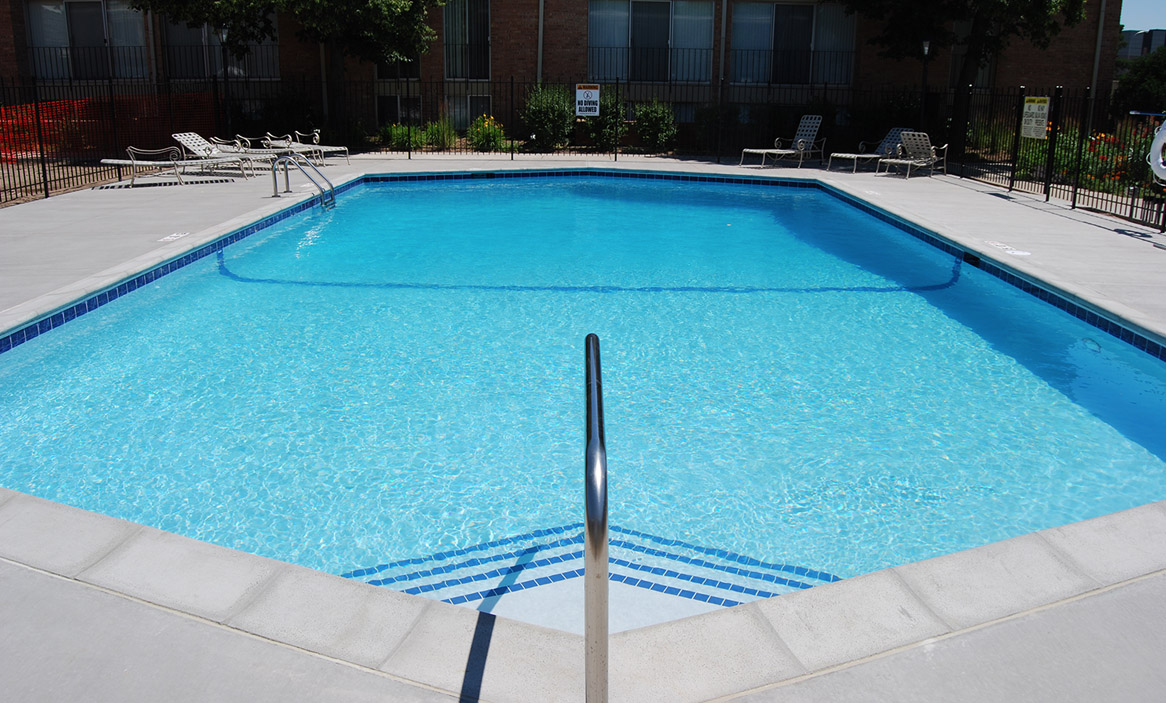
What commercial pool deck drains collect
Begin with the surface water, not the nearest grate. A useful location record distinguishes water observed after normal pool use, scheduled cleaning, rainfall or nearby irrigation. These are operating contexts to record, not a diagnosis of the water source or an instruction to create a test event.
Keep the deck path separate from the basin’s overflow collection. Minnesota’s decks-and-walkways rule requires deck drainage away from the pool and prohibits deck-drain connections to the recirculation system or gutters for new installations. A similar-looking slot at the pool edge does not establish where it leads. Ask the project team to identify the actual feature and destination.
A drainage concern may involve more than the visible inlet: the adjoining surface, channel, connection and downstream arrangement can belong to different parts of the scope. A new grate cannot be assumed to resolve an uninvestigated water-path problem. Equally, water remaining near a grate does not by itself prove that the entire deck needs replacement.
For broader surface condition and renewal decisions, use the separate commercial pool deck repair guide. This article focuses on deck runoff, drainage access and the interfaces that an assessment must resolve.
Record when and where water remains
Make the record recognizable to someone arriving for the first time. Identify the entry, wall, pool edge or other fixed reference near the observation. Use an existing plan or a simple marked location sketch, paired with photographs showing the surrounding area and the specific concern. Label the date and the circumstances already observed by staff.
Separate an event from a recurring pattern. An entry such as “water remained beside the east entrance after the recorded cleaning shift” is more useful than “drain failed again” if no cause has been established. Include available previous reports and what work followed them. A missing record should stay identified as missing.
Cleanability belongs in this conversation. Ask who has responsibility for routine surface care, which product-specific instructions exist, and which inspection or cleaning tasks require a qualified contractor. A channel that cannot be reached under the proposed operating arrangement raises an access question even before a replacement is selected.
Do not remove protective fittings, enter drainage spaces, obstruct an inlet or undertake excavation to gather information. If standing water, damaged grating or an uneven edge creates an immediate access concern, use the facility’s established restriction and escalation procedures. The project record supports the responsible personnel; it is not a reopening clearance.
Condition-to-scope matrix for a qualified review
Use the five columns together. The observation starts the conversation; the missing evidence defines the next question. The assessor establishes the findings, and the proposal records the repair boundary and the handover needed before the affected area returns to use.
| Visible observation | Missing evidence | Qualified investigation | Repair boundary | Return-to-use handoff |
|---|---|---|---|---|
| Water remains near an inlet after a recorded event | Location, timing, observed path and available drainage drawings. | Assess relevant surface, inlet and downstream conditions; establish the cause. | Separate routine care, component work and changes to the drainage arrangement. | Record the agreed site check, conditions observed and remaining limitations. |
| Debris repeatedly collects at the same feature | Cleaning history, recurrence pattern, product identification and access instructions. | Review cleanability, authorized maintenance access and the reason for recurrence. | Define maintenance responsibilities separately from any proposed physical alteration. | Provide appropriate care instructions and the contact for a recurring concern. |
| A grate or surrounding edge appears damaged | Component details, support condition, retention arrangement and prior repairs. | Assess compatible components and the condition of the supporting assembly. | State which grate, channel, support and adjoining surface work is included. | Confirm the agreed acceptance review and responsibility for removing restrictions. |
| Moisture or deterioration appears beside coping or tile | Actual water source, path and affected deck-to-pool interfaces. | Coordinate drainage, deck and pool-edge assessment rather than assume a leak. | Separate drainage work from tile, coping, joint and other adjoining repairs. | Document interface findings, completed work and unresolved items. |
| The water pattern changed after nearby work | Before-and-after records, changed materials and updated drawings. | Review the altered area and its relationship to the existing drainage path. | Identify restoration, interfaces, design responsibilities and any required review. | Hand over updated records and name the owner of follow-up checks. |
A contractor should explain how its findings move the project from one column to the next. A quotation that jumps directly from a photograph to a replacement product leaves the investigation and acceptance questions unanswered.
Prepare a contractor assessment brief in five parts
- Identify the drainage feature. Mark each affected location and assign a simple identifier used consistently in photographs, reports and proposals. Include existing drawings without relabeling an unknown line as a confirmed drain destination.
- Describe the operating context. Provide dated observations, relevant cleaning records, occupancy or weather context where already known, and prior service findings. Keep reported symptoms separate from conclusions.
- Show adjoining materials and projects. Identify deck finishes, coping, tile, entrances and nearby work. Ask who will assess compatibility and protect or reinstate adjoining surfaces. Coordinate the boundary with pool tile repair and replacement where the affected area reaches the pool edge.
- State the access constraints. Explain occupied routes, cleaning access, delivery arrangements and available closure periods. Ask the contractor to identify specialist access needs and the information required before selecting an investigative method.
- Define the decision and deliverable. Request findings, options, inclusions, exclusions and the proposed acceptance record. Make clear who will resolve unknowns and authorize any additional work.
The point is a usable assessment request, not an owner-written engineering specification. Connect it with commercial pool design planning when the work changes an arrangement or requires coordination beyond an isolated component.
Compare repair boundaries, not just drain products
Consider a hypothetical hotel comparing two proposals. One covers a specified replacement grate and its installation; the other includes investigation of recurring ponding, adjacent surface work and closeout records. They are different purchases. The example is not an Olympic Pools project, a diagnosis or a reason to assume the broader proposal is necessary.
Ask each proposer which finding supports the work, what stays in place and what happens if investigation reveals a different cause. Identify channel connections, supports and surrounding finishes explicitly. A general phrase such as “make good” should be clarified before the owner assumes it includes every disturbed surface.
Use commercial pool renovation planning when drainage overlaps a larger renewal. Olympic Pools presents commercial design, renovation and service as connected capabilities; the practical question is which parts of this particular project it can support at the facility’s location.
Minnesota’s public pool plan-review guidance lists installing deck drains without the asterisk used to identify required plan review. It also states that work outside plan review must still comply with the Minnesota Pool Code. Ask MDH to clarify the complete proposed scope, especially where other alterations are included; this single entry does not determine every approval for a project.
For facilities outside Minnesota, identify the applicable local requirements with the project team. CDC’s Model Aquatic Health Code provides model guidance for aquatic facilities. Its use by a jurisdiction is a separate question from whether a particular recommendation appears in a national reference.
Plan work access and the return-to-use handoff
Drainage work can affect entrances, cleaning routes and adjoining spaces as well as the pool closure. Agree on the work area, alternative access arrangements, site protection and the person who communicates changes to operating staff. Carry those responsibilities into the design-to-construction process, rather than leave them outside the quotation.
Separate completion of installation from acceptance of the affected area. The handover should identify the finished scope, relevant product instructions, agreed observations or checks, outstanding items and the responsible reopening decision-maker. Do not substitute a generic curing period or a desired opening date for the project’s actual requirements.
Keep the drain identifiers and updated records in the facility’s maintenance information. Use the commercial pool service guide to distinguish continuing owner and operator duties from the contractor’s completed work. Staff need to know whom to contact if the same water pattern returns.
Commercial pool deck drains: owner questions
What does a commercial pool deck-drain scope include?
It identifies the affected surface-water inlet and the connected components or interfaces included in the work. Grates, channels, downstream arrangements, deck finishes and pool-edge work should be named separately where relevant.
What records should the owner prepare?
Bring dated location photographs, available drainage plans, cleaning and service records, previous work descriptions and operating constraints. Mark what is unknown; do not supply an assumed cause or destination for concealed piping.
How does this differ from repair, replacement or a larger renovation?
Routine care, a defined component repair and an altered drainage arrangement are different scopes. A renovation may coordinate deck and other pool work. Findings, retained condition and intended use should explain the selected boundary.
Which conditions need a qualified site assessment?
Recurring standing water, damaged grating or supports, changed water paths and affected deck-to-pool interfaces warrant qualified review. Immediate access concerns belong with the facility’s responsible personnel and established procedures.
What changes the complete installed or repair scope?
Investigation findings, downstream connections, adjoining materials, access, compatibility and applicable review requirements can change the work. Ask how discoveries, exclusions and additional authorization will be documented.
How should seasonal timing and handover be planned?
Allow for assessment, scope decisions, required review, work and acceptance. Assign access restrictions, reopening decisions, closeout documents and later maintenance responsibilities before agreeing on a return-to-use date.
Bring the water-path question to the first conversation
Review Olympic Pools’ construction and service experience, then contact the team with the Minnesota facility location and your assessment brief. Ask what must be established before choosing a repair. That gives the conversation a defined drainage question and a record the project team can use.

Leave a Reply