


Commercial pool gutter systems collect water overflowing the basin and connect it with the pool’s circulation arrangements. Their scope includes the collection edge, channels, outlets, surge provision and related controls. Owners should compare the approved design with current observations before choosing a repair, replacement or broader change.
This guide helps hotel, apartment, school and other shared-use facility owners organize that decision. Olympic Pools’ Minnesota team brings pool design, construction, renovation and service context to the conversation. For a property outside Minnesota, confirm service coverage and local professional responsibilities rather than assuming a national installation network.
An overflow gutter is the collection feature at the pool perimeter that receives basin overflow. A gutter system includes the connected arrangements that convey and accommodate that water. It is not simply the visible grating, and it should not be confused with drains collecting water from the surrounding deck.
Preparing a Minnesota project? Request a consultation with the facility location, approved drawings and a dated description of the concern. A clear starting record is more useful than a request to replace a channel before anyone has established the cause.
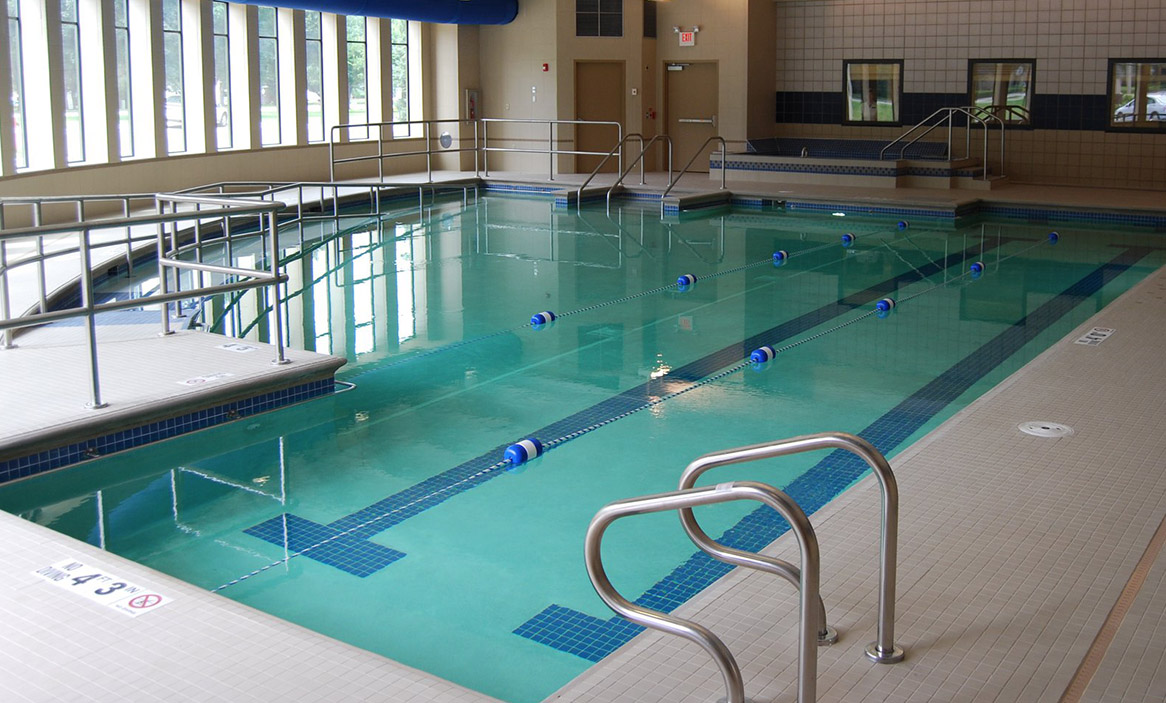
How commercial pool gutter systems fit into circulation
Start by tracing the system on the approved plans. Minnesota’s recirculation-system rule places gutters or skimmers among the connected circulation, filtration and treatment equipment. The visible perimeter feature is one part of that arrangement, not a stand-alone water-quality or safety system.
Conceptual flow diagram: basin overflow and return
Water reaches the collection edge.
The gutter receives overflow from the basin.
Outlets, piping and design-specific surge provision handle the collected water.
The approved system connects collection with filtration and treatment.
Return flow completes the simplified circulation loop.
Surge provision accommodates water displaced or moved into the collection system during use. It is a design question, not a tank size an owner can infer from the length of grating. The Minnesota overflow-gutter rule addresses surge capacity, overflow collection, water-level control and entrapment protection. Have the responsible professional determine what applies to the particular installation.
Ask where the actual surge provision is shown, which water-level reference the drawings use and what operating conditions the design assumes. These questions connect a reported symptom with the system’s intended function. They do not establish a diagnosis or authorize changing a control setting.
A basin gutter and a deck drain have different jobs
A basin gutter receives overflow associated with the pool. Deck drains collect surface water from the surrounding walking area. Similar-looking slots or grates do not establish that two features have the same destination, function or maintenance procedure.
Minnesota’s decks-and-walkways rule prohibits connections from deck drains to the recirculation system or gutters for new installations. Do not assume deck runoff belongs in the pool’s collection loop. Ask the designer to identify the actual routes and the requirements governing the work.
This distinction matters when a quotation uses the word drainage without identifying the system. Mark the affected feature on a plan and photograph it from a safe, accessible position. Keep basin collection, deck runoff and other equipment-room drainage identified separately. Do not open covers or investigate concealed piping yourself to complete the record.
Describe the observation before naming the repair
The table below is a way to prepare a qualified review, not a troubleshooting sequence. Use the facility’s established procedures for an immediate hazard or operating concern. A missing or damaged cover, unsafe edge or suspected entrapment concern needs the responsible operator’s prompt attention, not just a future project enquiry.
| Observation | Record to bring | Question for the qualified team |
|---|---|---|
| Overflow differs around the perimeter | Marked location, date, operating context and safely obtained photographs. | How does the observed collection pattern compare with the approved design? |
| Water-level behavior has changed | Existing logs, reference point, units, timing and recent work records. | Which level-control, surge or circulation interfaces need assessment? |
| Grating or an accessible edge is damaged | Location, product identification and the operator’s record of the condition. | What immediate access response and compatible repair are appropriate? |
| The same interruption keeps returning | Dated service reports, earlier findings and a description of what changed. | Does the evidence support a component repair or a wider investigation? |
| Deck water and basin overflow are being discussed together | A plan identifying the separate features and any available drainage drawings. | Which system does each feature serve, and what work is actually included? |
Use the commercial pool service guide to separate an assessment, a defined repair and continuing operating responsibilities. Do not turn a staff observation into a confirmed cause by repeating it in a purchasing specification.
Build a design-record comparison in six parts
Create one record that lets the designer, operator and contractor compare intended and current conditions. Each entry should identify its source and the question it helps resolve. Leave unknown information marked as unknown rather than supplying an assumed dimension or operating value.
- Approved design. Identify the plan revision, relevant details, collection layout, surge arrangements and associated equipment. Separate an approved drawing from a later sketch or undocumented change.
- Measured observations. Attach existing operating records and measurements obtained by the responsible qualified personnel. Record where, when and under which operating conditions they were taken; a photograph alone may not establish a level or flow.
- Units and reference points. Keep the units, datum and measurement method beside each value. Do not compare readings with different reference points as though they describe the same condition.
- Changes since the design. List recorded repairs, replacement components, layout changes and relevant adjustments. Distinguish documented work from a recollection that something may have been altered.
- Investigation question. State the unresolved question and the information needed to answer it. Ask what must be assessed on site before a method or replacement product can be selected.
- Responsible professional. Name the person or organization responsible for design interpretation, assessment, proposed work and any required authority contact. Identify the owner and operator who will receive the findings.
For a new facility or a substantial change, connect this comparison with commercial pool design planning. It helps keep collection, structure, circulation and operating access in the same project discussion.
Define the boundaries of a repair or replacement
The Minnesota Department of Health’s public pool plan-review guidance distinguishes like-for-like gutter replacement from installing a gutter, including its example of replacing a concrete gutter with stainless steel. It also distinguishes like-for-like surge or balance-tank replacement from a changed surge arrangement. Ask the authority to resolve the classification before committing to the project.
Outside Minnesota, establish the applicable local process separately. CDC explains that the Model Aquatic Health Code is guidance rather than federal law; jurisdictions can adopt or modify it. A reference to the MAHC does not establish that every provision applies unchanged at your property.
Consider a hypothetical owner comparing a quotation for identified grating replacement with a proposal to alter the collection edge and surge arrangement. These are not equivalent purchases. Ask which problem each addresses, what remains in place and which design or approval work is included. The example is a scope comparison, not a diagnosis or a claimed Olympic Pools project.
Where several systems are affected, discuss the complete commercial renovation scope. Olympic Pools presents Minnesota commercial pool experience across design, construction, renovation and service. Use relevant project context to frame questions, without assuming a particular gutter product, dealer relationship or repair method has already been selected.
Plan access, sequencing and the operating handover
Identify the access needed for assessment and work, including any concealed or confined areas that require qualified personnel and appropriate procedures. Do not ask facility staff to enter a tank or remove protective fittings just to obtain a photograph. Agree on how findings and changes will reach the owner and operator.
Coordinate the interruption with commercial pool construction planning when the work affects the basin edge, adjacent finishes, piping or other trades. Distinguish installation time from the whole closure, including dependencies, required review and return-to-use decisions. A desired opening date does not resolve an unfinished safety or operating concern.
At handover, request the completed-work description, updated relevant drawings, product identification, maintenance instructions and unresolved-item list. Assign continuing responsibilities explicitly. Discuss Minnesota pool operator training where relevant, alongside system-specific instruction; neither replaces the other.
Commercial pool gutter systems: owner questions
What does a commercial pool gutter system include?
It includes the perimeter collection feature and its connected overflow, conveyance, surge and circulation interfaces. The approved design determines the actual arrangement; visible grating alone does not define the system.
What records should the owner prepare?
Bring approved drawings, plan revisions, operating and service records, dated observations, units and reference points. Identify known changes and the professional responsible for investigating unresolved questions.
How does this differ from repair, replacement or a larger renovation?
A repair addresses an assessed problem. Replacement changes specified components. A larger renovation may alter the collection edge, structure or connected systems. Compare the actual work and required review, not just the quotation’s label.
Which conditions need a qualified site assessment?
Changed collection patterns, recurring interruptions, damaged grating, uncertain water-level behavior and undocumented alterations warrant qualified review. Follow the operator’s established response for an immediate hazard rather than waiting for a project decision.
What changes the complete installed or repair scope?
Retained condition, design compatibility, surge provision, piping, access, adjacent finishes and approval requirements can change the work. Ask proposers to identify assumptions, exclusions and the process for authorizing discoveries.
How should service access, seasonal timing and handover be planned?
Agree on authorized access, dependencies, closure responsibilities and return-to-use requirements. Keep completion records and assign future inspection, maintenance and operating duties to named contacts.
Make the next project conversation specific
Review the Olympic Pools team and background, then contact Olympic Pools with the Minnesota facility location and design-record comparison. Ask what assessment is needed before choosing a method. That starts the conversation with a defined question, not an assumed gutter replacement.

Leave a Reply