


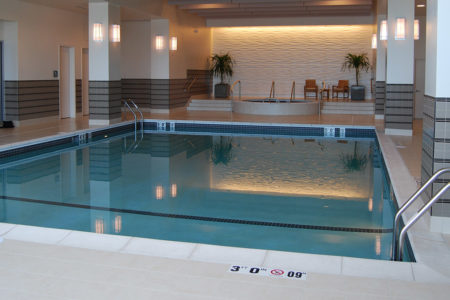
Commercial pool coping is the finished edge between the pool and the surrounding deck. A useful repair or replacement scope says what happens at every connection: the deck joint, the tile or finish below it, retained fittings, and any adjacent drain. Matching the visible edge is only one part of the job.
If you manage a hotel, school, community pool or multifamily property, you may be comparing two bids that both say “replace the coping.” Ask each bidder to mark exactly where its work stops. The answer tells you whether the quotes cover the same work, who handles surprises and what still has to happen before your pool can reopen.
What commercial pool coping includes
Coping is the perimeter finish at the top of the pool. It may be a separate piece or part of a continuous edge. In a commercial pool coping project, the work might also touch the structure supporting that finish, the transition to the deck, the tile or finish on the pool side, and items built into the perimeter. What belongs to the project depends on the actual assembly.
Olympic Pools designs, builds, renovates and services pools from Minnesota. For a Minnesota facility, ask about a site consultation with a few photos, a marked plan and your closure window. For work outside Minnesota, confirm service coverage before planning around a site visit.
Map the commercial pool coping before pricing it
Start with a plan or a simple perimeter sketch. Mark segments that share a condition and name the features that interrupt them: corners, steps, ladders, handrails, covers, gutters and drains. Give each photo a location so a bidder can put a visible defect back on the plan. The photo set is evidence of what you can see, not a record of what is sound underneath.
- Name what stays. Mark the coping, deck, tile, finish and hardware as retained, replaced or still to be assessed. A bid may protect one item without undertaking any repairs to it.
- Find the deck transition. Show where the coping meets the deck and note open joints, uneven transitions or previous patching. Have the design or assessment team identify the joint’s function and how the proposed work will preserve it. A joint at the deck is not just another line to fill for appearance.
- Look down the pool face. Identify the waterline tile, gutter or interior finish that meets the edge. If tile or finish will be disturbed, ask where it would be restored and by whom. The pool tile assessment guide helps organize photos of the separate tile condition.
- Identify fittings and routes. Mark ladders, anchors, covers, drains and service paths near the work. Ask the bidder to describe protection and any removal, reinstallation or separate review. Check whether the same route will need to remain available to staff during closure.
- Agree on the stop point. Before work, specify who the crew calls if it exposes an unexpected condition. Document it before covering it. Decide who can authorize further assessment, a change in scope or a revised opening date.
Use the notes from earlier repairs, then ask how the contractor will verify proposed tie-ins. Background on Olympic Pools’ construction and service experience and its commercial pool project planning can help you decide which questions to bring to a first meeting.
Repair, replace or investigate beyond the edge?
Localized repair can make sense when a qualified assessment finds an isolated defect and a sound, compatible area for the repair to tie into. Segment replacement may be more appropriate when deterioration covers a longer run or when isolated fixes would leave poorly coordinated transitions. Neither answer follows from a photo alone. Ask what the contractor checked and what remains unknown.
Recurrent movement, displaced sections, deteriorated supports, cracking that continues into the deck or basin, persistent water at the same location, or loose material near the pool are reasons to request a site assessment. Tell the facility operator about conditions that affect use or access so the responsible people can make the immediate safety decision. A new-looking edge does not establish that the underlying condition has been addressed.
For commercial pool coping that touches a larger failure, commercial pool renovation planning puts the edge in context with the pool’s remaining life and operating priorities. Ask whether an edge-only bid would interrupt the same areas that will need work later. If the response includes an alteration to the basin, commercial pool construction planning is a better place to organize design, permits and project responsibilities.
Where the interior finish is included, the contractor should identify the specific finish system. SGM’s Diamond Brite technical sheet, for example, treats the assessment and preparation of existing surfaces as part of that coating’s installation. It is a product-specific finish reference, not a specification for the coping. Use the guide to pool plaster and resurfacing decisions to separate the finish work and startup from the edge installation.
Use a comparable scope worksheet
Ask every bidder to respond to the same rows. Record “excluded” or “depends on inspection” when it applies rather than leaving a blank that people could read as included. In commercial pool coping proposals, the biggest difference may be who restores an adjacent surface or who manages an unexpected repair, not the length of the perimeter.
| Scope item | What the bidder should specify | What the owner can ask to receive |
|---|---|---|
| Limits and surface preparation | Perimeter segments, removals, preparation, protection and how exposed conditions are assessed. | Marked scope drawing, photos and a written method for handling discoveries. |
| Retained interfaces | Responsibility for the deck joint, tile or finish below the edge, anchors and nearby drains. | Marked tie-in points and explicit inclusions or exclusions for each trade. |
| Finish selection | Proposed materials, intended profile, samples and which finish requirements apply. | Agreed sample plus the specified assembly and its care instructions. |
| Closure and access | Work sequencing, cure and weather assumptions, access controls and conditions that could extend closure. | Phased schedule and designated people who can authorize changes. |
| Startup | Whether the basin, finish or operating equipment is affected; who owns any refill, startup and required checks. | Named startup lead, applicable manufacturer instructions and startup records as needed. |
| Acceptance | Who will inspect tie-ins, finish and access; who resolves the punch list and returns the facility to the operator. | Dated observations, as-built changes, care and warranty documents and any required approval records. |
A hypothetical example: same perimeter, different work
Two bidders price the same 60 feet of visible commercial pool coping for a hotel pool. Proposal A includes removal and installation of the edge but excludes the deck joint, the tile below it and any unsound material exposed during work. Proposal B identifies a joint transition, includes repair of the disturbed tile within that run, and describes how unexpected deterioration is documented and priced.
The comparison does not make Proposal B the better buy or predict a cost. Proposal A might fit if another contractor has those responsibilities and the owner accepts the remaining risk. To compare them, ask for a scope that assigns the joint and tile in both offers. Identify the same repair limits, whether discovered work is excluded, who approves a change, and whether that would affect the closure. Only then do the prices answer the same question.
Plan closure, startup and acceptance as separate steps
When commercial pool coping work requires closing an area, decide who protects the work zone, controls access and updates the facility’s reopening plan. Ask the contractor what weather or cure conditions its schedule assumes. Tell it when an event, lesson program, staffing schedule or seasonal reopening makes a delay especially disruptive. Agree on which milestones are firm and which depend on the conditions found after removal.
In Minnesota, the Minnesota Department of Health’s public pool plan-review guide lists deck installation or refinishing, including coping, separately from changes to the original structural design of the pool basin. Only the latter of those two examples is marked for review in that guidance. Projects that do not require review still must comply with applicable requirements. If the proposed work changes beyond the edge or the classification is unclear, confirm the scope with MDH or the authority that oversees your facility. Requirements in other jurisdictions can differ.
At handover, walk the repaired segments with the people responsible for the edge, adjacent work and pool operation. Reconcile the punch list, inspect transitions and equipment access, and collect records of any changes that are now hidden. If the pool’s finish or systems were disturbed, confirm who owns the applicable startup and clearance steps. Installation completion does not by itself establish that the pool is ready for use. Use the commercial pool service guide to plan the conversation about ongoing responsibilities.
Commercial pool coping questions
What does commercial pool coping include?
It is the pool’s finished perimeter edge. A repair contract may also cover preparation, joint transitions, protection of retained features or repairs where the coping meets the tile and finish. Ask the bidder to name each included part.
What records should the owner prepare?
Bring a marked perimeter drawing, photos indexed to it, previous repairs and inspection records, existing finish or product information, and the closure window. Mark fittings or access routes that the work might affect.
How does coping work differ from a larger renovation?
Coping work starts at the perimeter and defines related tie-ins. A broader renovation may change connected parts of the deck, basin or facility. Base the decision on the assessed condition and planned use, not on the appearance of the old edge.
Which conditions need a qualified site assessment?
Ask for an assessment when movement recurs, material comes loose, cracks cross into retained construction, water keeps appearing in the same place or the supporting condition is unknown. Tell your operator promptly if the condition affects safe access or use.
What changes the installed or repair scope?
Extent of removal, supporting conditions, the chosen finish, tile and deck transitions, fittings, contractor access and any required reviews can change the scope. Ask how each exclusion or discovery would affect both the proposal and the closure.
How should service access, seasonal timing and handover be planned?
Show the crew’s route and the areas staff must still reach. Set a closure range with weather and cure assumptions, name the owner of startup and inspection, and keep an acceptance record for the next facility operator.
Bring a marked plan to the first conversation
Draw a line around the work you think you need. Add the deck, tile and drain transitions that cross that line, then write down your preferred closure dates. Share your commercial pool coping scope with Olympic Pools so the first conversation can focus on what should be assessed, what can be priced and what is still unknown.

Leave a Reply