


A commercial pool gate is part of the facility’s barrier and access-control system, not an isolated hardware purchase. Plan the gate leaf, posts, hinges, closing and latching equipment, locks, accessible route and emergency access together. The right scope starts with the actual opening, its condition and the requirements that apply to that property.
This guide helps hotel, apartment, school and other shared-use facility owners decide what to assess, repair or replace. Olympic Pools brings Shakopee-based pool expertise to that conversation. For a property outside Minnesota, confirm service coverage and local review responsibilities rather than assuming a Minnesota solution applies everywhere.
Preparing a project? Request a consultation with the facility address, photographs, equipment information and the operating problem you need to solve.
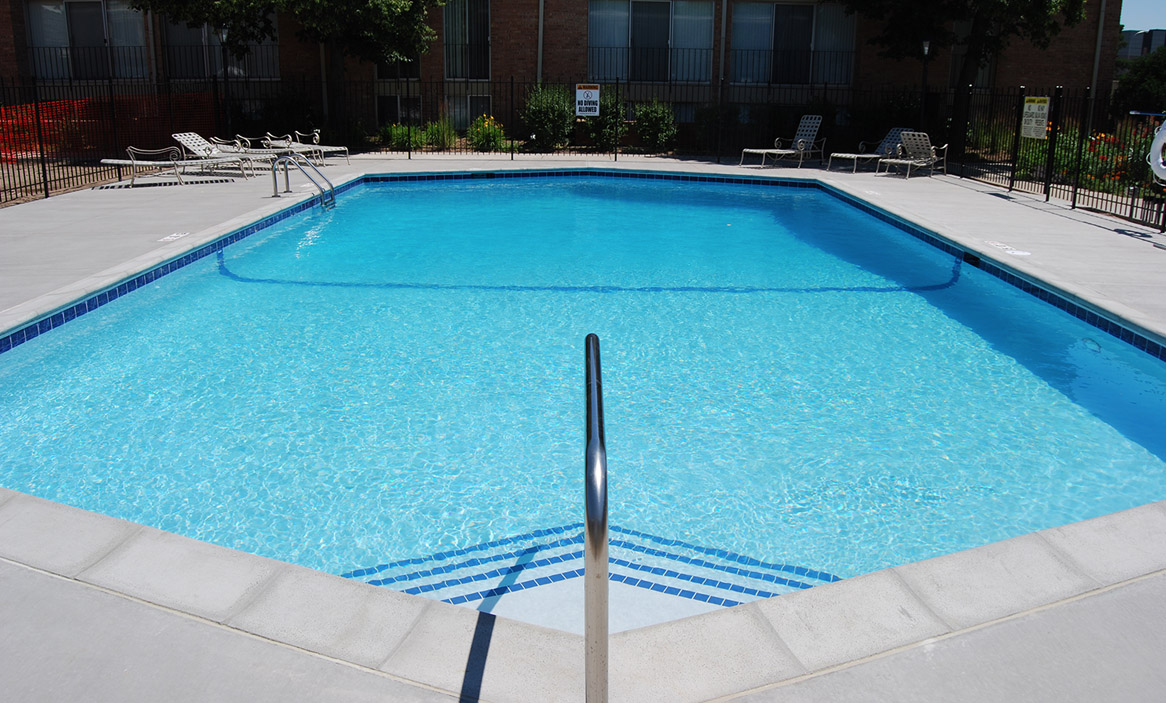
Define the commercial pool gate as a complete opening
A pool access system is the combination of physical barriers, controlled openings and operating responsibilities used to manage entry to the pool area. The gate is one component. Its function depends on the surrounding enclosure, compatible hardware, circulation routes and how the facility is operated.
Begin with a marked photograph or site plan. Identify the gate, adjacent fence sections, nearby doors and the route people use to reach the pool. Separate the main guest entrance from service or equipment access. An opening used for deliveries may have a different operating role, but it still belongs in the enclosure review.
Ask the project team to identify the retained components and the limits of the proposed work. Does the quotation cover hinges and latch only, the gate leaf, posts and anchors, adjacent fencing, electrical access controls or changes to the surrounding surfaces? A list of replacement parts is not the same as a coordinated scope.
Olympic Pools describes design, construction, renovation and service for commercial pools and spas. Ask how the pool-related work would connect with any specialist fencing, accessibility or access-control work your project needs. The company’s construction and service experience provides business context, not a substitute for assessing your particular gate.
Five questions to organize a qualified condition review
- What has changed? Record whether the concern is recent, intermittent or recurring. Note the location and circumstances without diagnosing a cause from a photograph. A gate that catches at one point may involve more than the latch.
- Which components are affected? Identify visible damage, corrosion, loose components, misalignment or interference around the opening. Ask the qualified assessor to determine the condition of supports and retained hardware rather than assuming a new closer will resolve everything.
- What is the intended closing and latching function? Bring the existing product information and inspection records. Have the qualified team assess the opening against its applicable requirements and manufacturer instructions. Do not change settings, defeat a latch or prop the gate open to make circulation easier.
- Who uses this opening? Identify guests, staff, maintenance contractors and emergency responders. Explain how authorized entry is managed and where the opening sits on the accessible route. Include the facility’s actual operating arrangements, not just the intended layout.
- Who resolves an unsafe condition? Assign the operator, service contact and person responsible for restricting access under the facility’s established procedures. If the barrier is not securing the pool, do not treat a repair request alone as an adequate operating response. Involve the responsible operator and qualified service team promptly.
These questions produce a useful assessment brief. They are not a self-inspection certificate or permission to keep a pool open. If a change affects the layout, connect it to the broader commercial pool design decisions before ordering equipment.
Review locks, fencing and emergency access together
A lock controls who can enter; closing and latching equipment have their own functions. Do not assume that adding a padlock or electronic reader solves a barrier problem. Ask the qualified project team and relevant authority to reconcile controlled entry, accessible passage and emergency egress for the specific opening.
In Minnesota, Rule 4717.1550 on pool access restriction and fencing requires controlled access to public pools and addresses self-closing, self-latching, lockable gates in its fencing provisions. It treats building enclosures, older fencing and wading pools separately. A single fence-height or latch-height rule taken out of that context is not a national purchasing specification.
For a facility elsewhere, identify the enforcing jurisdiction, applicable code and approved plans first. CDC explains that the Model Aquatic Health Code is guidance, not federal law; a jurisdiction may adopt, modify or use it as a reference. Ask which requirements actually govern your property.
Accessibility also needs an opening-specific review. The U.S. Access Board’s guide to entrances, doors and gates addresses gates on accessible routes, including maneuvering space and hardware. Separately, the Justice Department’s accessible-pool guidance discusses access into the water. A pool lift does not answer every question about reaching the pool through a gate.
Record how emergency responders and authorized service personnel obtain access, who maintains the procedure and what happens when normal electronic access is unavailable. Have the responsible professionals approve the arrangement. Do not publish access codes or key locations in a document shared with bidders or guests.
Build an access equipment record before requesting proposals
Give each opening a clear identifier, such as the main pool entrance or equipment-access gate. Use the record below for each one. Leave unknown items marked for assessment; a blank product label should not become a guessed specification.
| Record | What to collect | What to resolve |
|---|---|---|
| Product and opening | Location identifier, photographs, manufacturer and model information where available. | Which components remain, and which products are proposed? |
| Observed condition | Dated description of the problem, affected components and prior service reports. | What needs a site assessment rather than an assumed repair? |
| Design and jurisdiction record | Relevant approved plans, inspection correspondence and responsible authority. | Which barrier, accessibility and egress requirements apply? |
| Responsible role | Facility operator, project contact, qualified assessor and maintenance contact. | Who authorizes work, manages access and accepts the completed scope? |
| Next inspection | Applicable inspection or maintenance instructions, next planned review and assigned person. | What schedule and records are required for this equipment and facility? |
Keep sensitive access information in the facility’s controlled records, separate from this procurement worksheet. The article’s record is for organizing equipment and responsibilities, not for collecting guest information or distributing security credentials.
Compare a defined repair with replacement or renovation
A localized repair may be appropriate when assessment supports retaining the opening and surrounding system. Replacement may involve the gate, its supports and compatible hardware. A larger renovation can also change the fence line, deck, circulation route or access-control system. Ask bidders to price the same assessed scope before comparing totals.
Consider a hypothetical facility with recurring latching complaints. One proposal replaces a latch; another includes assessment of the opening, retained components and the closing system. Those are not equivalent purchases. Ask what evidence supports each approach, what remains excluded and how further findings would become an approved change. The example is not a diagnosis or a recommendation to replace a particular part.
Require product identification, installation responsibilities, coordination with adjacent work, documentation and acceptance arrangements in the proposal. Ask which assumptions depend on a site visit. Separate allowances and potential changes from the fixed scope, including their effects on operating access and timing. Do not infer a warranty or a promised reopening date from a product brochure.
Plan closure, service access and the operating handover
For planned work, agree on the work area, authorized access, deliveries and responsibilities during the closure. Do not use a target reopening date as a reason to bypass an unresolved barrier or required review. Coordinate changes with the design-to-construction process when they form part of a larger project.
In a Minnesota seasonal facility, discuss the relevant opening or closing window, weather-dependent work and how equipment will be maintained when the pool is not in use. Confirm the actual product instructions and operating requirements; there is no universal calendar interval suitable for every gate.
At handover, request the installed product record, applicable instructions, completed work description, unresolved items and named service contacts. Agree who will record future concerns and arrange assessment. Define the service responsibilities for facility teams rather than assuming the installation contractor remains responsible for every later operating task.
Training belongs in that handover. Olympic Pools offers Minnesota pool operator training; discuss its fit with the facility’s operating needs. The CPO certification explanation provides context, but operator training is not a replacement for qualified gate design, installation or jurisdictional approval.
Common commercial pool gate questions
What does the scope include?
Define the opening, supports, hardware, adjacent fencing and relevant access-control interfaces. Identify what remains and who handles assessment, installation, approvals and handover. The equipment record helps distinguish a parts purchase from a complete project scope.
What records should the owner prepare?
Bring photographs, product identification, a dated problem description, previous service records and applicable plans or inspection correspondence. Identify the responsible operator and project contact. Keep security credentials out of broadly shared documents.
How does this differ from repair, replacement or a larger renovation?
A repair addresses a defined assessed problem. Replacement changes specified equipment or components. Renovation may also affect the enclosure, circulation routes and surrounding work. The assessment determines the appropriate boundaries, not the label on a quotation.
Which conditions need a qualified site assessment?
Recurring failure to close or latch, damaged or loose components, alignment concerns, proposed access-control changes and uncertainty about the enclosure or accessible route warrant qualified review. Follow existing facility procedures for immediate access concerns rather than waiting for a purchasing decision.
What changes the complete installed or repair scope?
Retained component condition, compatibility, supports, adjacent surfaces, electrical interfaces, jurisdictional requirements and operating arrangements can change the work. Ask each proposer to identify assumptions, exclusions and the process for authorizing changes.
How should service access, seasonal timing and handover be planned?
Agree on closure responsibilities, authorized access, dependencies and acceptance before work starts. Retain product instructions and service contacts, and assign responsibility for subsequent inspections and maintenance. Confirm the relevant operating window rather than assuming a standard reopening date.
Bring the opening, the problem and the records to one conversation
For a Minnesota project, contact Olympic Pools with the facility location, opening identifier, photographs and your equipment record. Ask what can be assessed within the proposed pool scope and which specialist or authority must be involved. That gives the consultation a concrete job: define the work and responsibilities before you commit to equipment or a date.

Leave a Reply