


Commercial pool replastering services renew a pool’s interior finish, but a useful proposal must also define surface preparation, connections to retained tile and fittings, closure responsibilities, startup and owner acceptance. Facility teams should compare that complete scope before choosing a finish or committing to a reopening date.
This guide is for hotel, community, school and other shared-use facility owners deciding what to ask a contractor. Olympic Pools brings a Minnesota perspective through its Minnesota pool design and service work. For a project elsewhere, confirm service coverage, local requirements and who will support the pool after handover.
Have an upcoming closure window? Request a project consultation with the facility address, existing finish information, photographs and target reopening date.
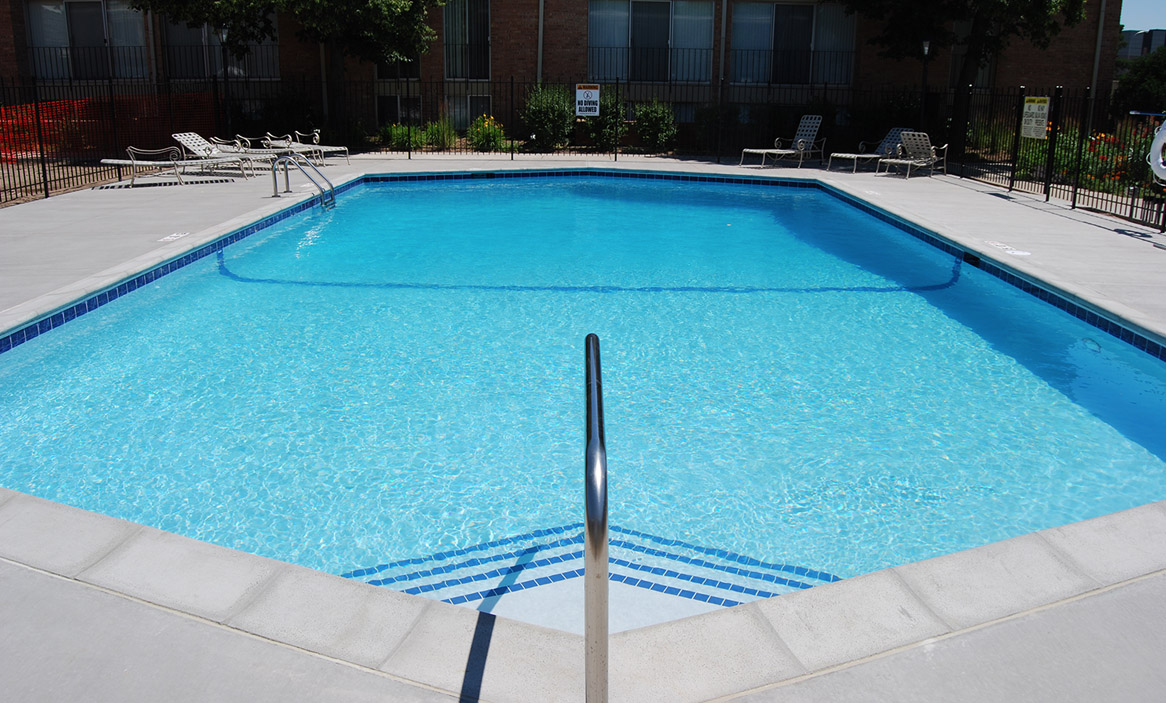
What commercial pool replastering services should cover
Commercial pool replastering is the planned renewal of a shared-use pool’s interior finish, with preparation and related work determined by its actual condition. It is not automatically a structural repair, a leak correction or an equipment replacement. Those needs require their own assessment and clearly assigned scope.
A proposal should identify what will be removed, what will remain and what the contractor needs to verify on site. Ask where the finish stops: at waterline tile, steps, benches, fittings and other transitions. A short description such as “new plaster throughout” leaves too much room for different assumptions about those interfaces.
Olympic Pools describes commercial design, renovation and service as related parts of its work. That is a useful starting point for a consultation: discuss the basin and its operating context together, then separate the actual contracted responsibilities. The company’s public information about the Olympic Pools team and background provides business context; ask who will assess, perform and support your particular project.
Should the pool be repaired, replastered or renovated?
Start with the problem, not a preferred product. A photograph can help locate roughness, staining or a visibly damaged area, but it does not establish the cause, the condition beneath the surface or whether a proposed repair will be suitable. Persistent water loss, recurring cracks, loose material or a deteriorating interface deserve a qualified site assessment rather than a cosmetic assumption.
- Localized repair: ask whether the concern is limited enough for a defined repair and what appearance differences or remaining conditions should be expected.
- Finish renewal: consider replastering when the assessed need is a broader interior-finish project. Define preparation and acceptance along with the chosen material.
- Larger renovation: separate changes to the basin, circulation systems, access, tile, deck or other components from finish renewal. Assign their design, coordination and approval responsibilities explicitly.
The guide to commercial renovation scope helps frame that wider decision. A replastering proposal should not silently stand in for a renovation plan, and a renovation proposal should not make a finish choice before the relevant conditions have been assessed.
Comparable scope worksheet
Give every bidder the same records and ask each to complete the following worksheet. Compare inclusions, exclusions, unresolved conditions and responsible parties side by side. A lower total can reflect less work or more owner responsibility, not simply a better price.
| Scope item | What the proposal should state | Record to retain |
|---|---|---|
| Surface preparation | Assessment assumptions, removal boundaries, substrate work and how concealed conditions become approved changes. | Condition notes, photographs and written change process. |
| Retained interfaces | Tile, steps, fittings and adjacent surfaces that remain, plus repairs or coordination included at each transition. | Marked-up scope drawing or location list. |
| Finish selection | Exact manufacturer, product, color or blend, sample approval and applicable installation and care instructions. | Product identification, approved sample and manufacturer documents. |
| Closure and access | Work area controls, deliveries, utilities, waste handling, owner tasks and dependencies affecting the proposed window. | Responsibility list and agreed sequence. |
| Startup | Who manages the initial fill, water testing, finish-specific startup and transfer to the facility operator. | Startup instructions, named contacts and dated operating records. |
| Acceptance and reopening | Inspection, punch-list process, documentation and who authorizes return to use under applicable requirements. | Acceptance record, outstanding items and reopening authorization. |
Leave an item marked “to be assessed” when it genuinely cannot be established yet. Require a defined next step and decision owner instead of letting that uncertainty disappear into a lump-sum description. Ask whether an allowance is included and how a change would affect both cost and closure.
Choose the finish with its interfaces and care requirements
A finish name alone is not a specification. Review the exact product and sample, the intended appearance in the pool and the manufacturer’s instructions that apply to that selection. Read the separate guide to SGM plaster and finish options for material context, then bring the selected product back into the complete service scope.
SGM’s Diamond Brite guidance treats startup and water balance as part of the finish process. Ask the contractor to provide the applicable current instructions and name the experienced professional responsible for carrying them out. The facility operator needs a documented handover, not an assumption that ordinary maintenance resumes immediately.
Discuss retained tile and fittings before agreeing to the finish boundary. If the waterline is also affected, use the questions in waterline tile repair decisions to distinguish included work from an adjacent repair. Do not allow a new-looking interior to obscure an unresolved condition at its edge.
Seven records to prepare before the site visit
- Facility and pool identification. Supply the address, pool type, available dimensions or plans and a contact who can provide authorized access.
- Finish history. Find the product name, approximate installation date, prior repair records and any remaining warranty documents. Mark unknown details as unknown.
- A condition map. Pair dated photographs with locations. Distinguish an observed symptom from a diagnosis, and include earlier photographs if the condition has changed.
- Operating records. Gather available water-testing, maintenance and service records relevant to the assessment. Ask the contractor which records are needed rather than discarding an inconvenient result.
- Related project records. Include known leak investigations, tile repairs, equipment changes and prior professional assessments that could affect the finish work.
- Access and closure constraints. Describe delivery routes, occupied areas, storage limits, utilities and dates when the facility can actually be closed.
- Decision and reopening contacts. Identify who approves changes, accepts the work, coordinates with the relevant authority and receives the operating handover.
This packet makes quotations easier to compare without asking the facility team to diagnose the pool. For new or substantially changed facilities, the questions around commercial construction and handover can help identify records that should already exist.
Plan the closure through reopening, not just application
Ask for a sequence that covers assessment, scope confirmation, any required approvals, mobilization, preparation, finish application, initial fill, startup, inspection and owner acceptance. Establish the dependencies between those steps. A proposed application date is not a confirmed reopening date.
For Minnesota facilities, the Minnesota Department of Health project guidance distinguishes basin refinishing or resurfacing from specified structural and system changes that require plan review. Confirm how the full proposed project is classified with the responsible authority; the word “replastering” does not settle every requirement. Outside Minnesota, check the facility’s actual jurisdiction.
Seasonal timing should account for the site’s real access and working conditions, the finish manufacturer’s requirements, contractor availability and the facility’s ability to manage the closure. Do not advertise a fixed turnaround before those constraints are known. Arrange a decision point for any newly discovered condition so that a deadline does not silently become permission to omit necessary work.
Before handover, name the person responsible for startup records, operating instructions, open punch-list items and follow-up questions. Clarify where the contractor’s work ends and the ongoing commercial pool service scope begins. Retain product information and the agreed acceptance criteria with the facility’s records.
A hypothetical proposal comparison
Imagine a community facility planning interior finish renewal during a closure. Proposal A names a finish and an application window. Proposal B names the same finish but also identifies preparation assumptions, retained tile, the change process, startup responsibility and acceptance records. This is an invented example, not an Olympic Pools project or a statement about any contractor.
The owner should not assume Proposal A includes everything in Proposal B. Send the same worksheet to both bidders. If A excludes startup, establish who will perform it and include that responsibility in the total project plan. If B leaves a tile condition unresolved, require an assessment and decision before treating its schedule as firm. The comparison improves when both proposals answer the same questions, even if their prices remain different.
Common questions
What do commercial pool replastering services include?
The agreed work may include assessment, surface preparation, finish application and startup coordination. Ask for explicit boundaries, interfaces, exclusions and acceptance criteria. Do not assume a finish proposal includes structural repairs, equipment work or every adjacent surface.
What records should the owner prepare?
Bring plans if available, finish and repair history, dated photographs, relevant operating records, access constraints and closure dates. Identify who can approve changes and who will accept the operating handover. Label missing records honestly.
How does replastering differ from repair, replacement or a larger renovation?
A repair addresses a defined problem; replastering renews the interior finish across the agreed area. Replacement or a larger renovation can involve additional components or system changes. A qualified assessment should establish which scope addresses the actual condition.
Which conditions need a qualified site assessment?
Recurring cracks, loose material, persistent water loss, damaged interfaces and uncertain previous repairs need professional evaluation. Photographs help organize the conversation but do not prove the cause or establish that a cosmetic treatment is sufficient.
What changes the complete project scope?
Preparation needs, concealed conditions, retained tile and fittings, product choice, access, related repairs, approval requirements and startup responsibilities can all change the project. Compare those items before comparing totals, and require written handling of changes.
How should access, seasonal timing and handover be planned?
Agree on the full closure sequence, work-area access, deliveries, utilities, startup and acceptance. Confirm the conditions for reopening with the responsible professionals and authority. Assign a facility contact to receive instructions and records before responsibility transfers.
Prepare a complete scope for the next conversation
Send Olympic Pools the facility address, photographs, available finish and repair records, and your preferred closure window. Request a commercial pool consultation to discuss assessment, service coverage and the responsibilities that belong in a comparable proposal. If the facility is outside Minnesota, confirm project fit and ongoing support before planning around a presumed service area.

Leave a Reply